
案例不是服務名稱配對題
Google Cloud 目前公布四份標準 PCA 案例:Altostrat Media、Cymbal Retail、EHR Healthcare 和 KnightMotives Automotive。官方考試頁說明,每場標準考試會使用其中兩份,案例題約占 20–30%,考試中可以用 split screen 查看案例。
案例的作用是補充情境。題目仍會另外指定一個目標,例如降低維運、滿足資料落地、改善發布可靠性或建立 AI workflow。答案必須同時符合:
- 題目這次問的事情。
- 案例已寫明的 business/technical requirement。
- 現有環境、團隊、時程和不能立即搬動的系統。
因此,「EHR 就選最嚴格安全」、「Altostrat 就選 CDN」這種背法很危險。案例內通常有多條問題線,同一家公司可以考 networking、migration、observability、AI、security 或 cost。
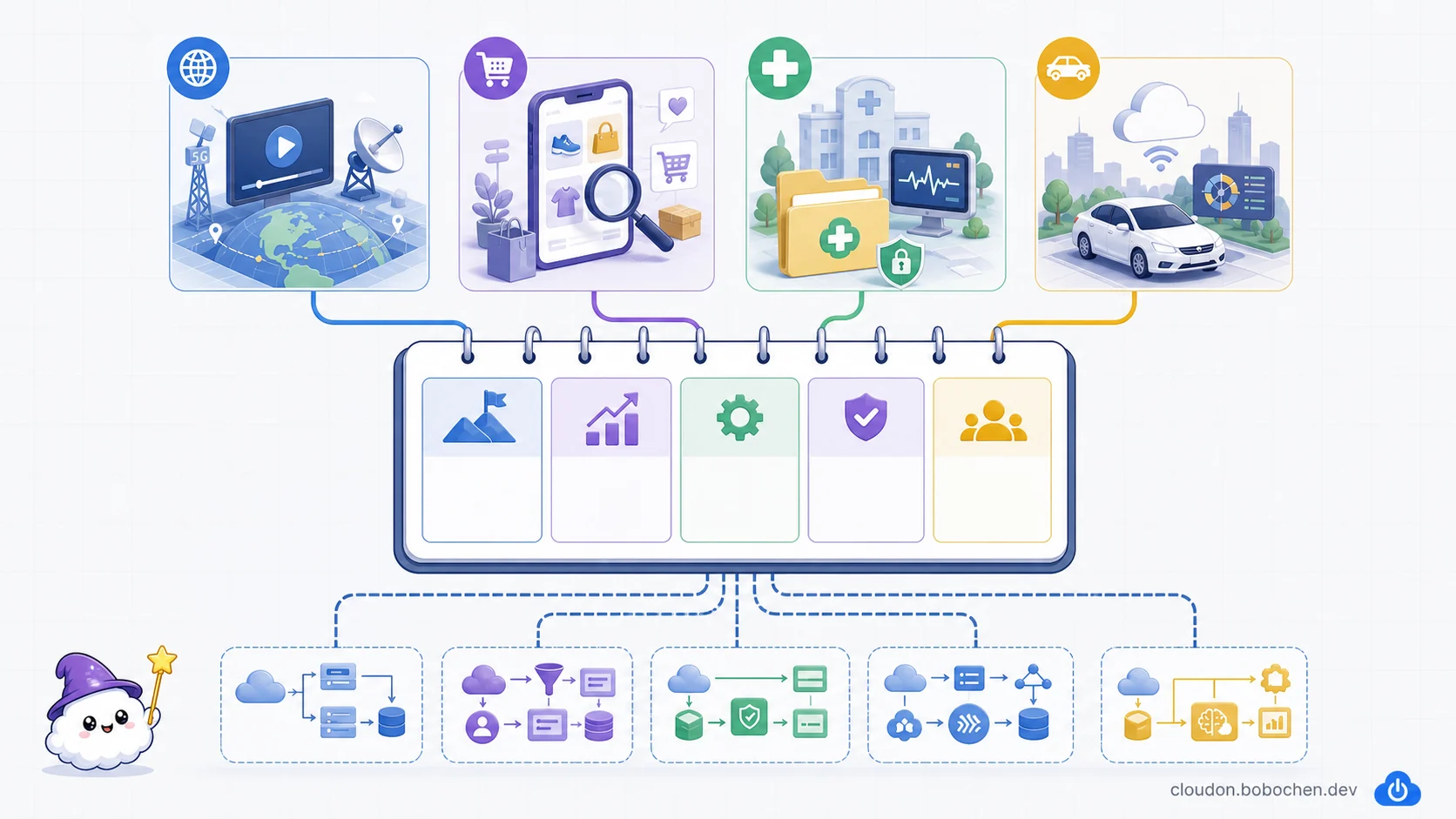
圖解:媒體、零售、醫療與汽車案例的產業不同,但都能用同一套五格筆記整理;筆記提供決策證據,不是把每家公司綁死在一張產品架構圖上。
先把原文整理成五格筆記
每份案例只記五類資訊:
| 類別 | 要找的內容 |
|---|---|
| Business outcome | 想改善收入、體驗、速度、成本還是風險? |
| Existing environment | 已用哪些 platform、database、identity 和 operation tool? |
| Hard constraint | 哪些 legacy system 目前沒有搬遷計畫?哪裡有 regulatory/connectivity 限制? |
| Technical requirement | Availability、scale、hybrid、AI、data 或 deployment 的明確要求 |
| Success evidence | 用什麼 KPI、SLO、quality evaluation 或 audit evidence 證明有效? |
表格超出欄寬時,可左右捲動;鍵盤可聚焦表格後用左右方向鍵查看。
先忠實抄案例,再寫自己的 architecture hypothesis。不要把「我覺得它應該用 Spanner」混進原文事實,否則考場上很容易用自己腦中的假案例答題。
Altostrat Media:既有雲端平台加上 hybrid 與 GenAI
官方案例明確寫了什麼
Altostrat 管理 podcast、訪談、新聞和紀錄片等大量影音內容。既有環境不是全地端:
- Content management/delivery platform 已使用 GKE。
- 多格式 media library 存放在 Cloud Storage。
- BigQuery 是主要 data warehouse。
- Cloud Run functions 處理 video transcoding、metadata extraction 和 recommendation 等 event-driven task。
- 部分 legacy system 仍在地端,負責 content ingestion、archival 等 workflow;近期(near future)會現代化並搬到 Google Cloud。
- 身分由 Google Identity 與 third-party identity provider 混合管理。
- Cloud Monitoring、Prometheus 等工具並存,告警主要寄 email。
它想加速跨 Google Cloud/on-premises 的 operation workflow 並提高可靠性、簡化 infrastructure management 以便快速部署 application、最佳化(optimize)storage cost 並維持 media content 的 high availability 與 scalability,同時建立 natural-language support、摘要、metadata extraction、harmful-content detection、內容分析與 personalized experience。Technical requirement 另外寫明:用 centralized management platform 現代化 containerized deployment 的 CI/CD,並在 on-premises 與 cloud 都提供 scalable、performant 的 Kubernetes environment。AI decision 還要可 audit、可解釋;可靠性與成本都是 executive statement 明確點出的優先事項。
可能考你的判斷
- Modernization:不是把已在 GKE、Cloud Storage、BigQuery 的部分重新設計一次,而是找出地端 legacy system(ingestion、archival 等 workflow)與多環境管理的缺口。
- Hybrid:大量 media ingest 需要安全且高效的連線、transfer strategy、retry 和 checksum,不能只回答「開 VPN」。
- Storage:先看 access pattern、retention、retrieval need 和 lifecycle,再選 class;archive 便宜不代表適合常取用內容。
- GenAI/multimodal:摘要、metadata、內容安全和對話支援是不同 task,應分別定義 model、grounding、evaluation、human review 與 fallback。
- Operations:告警主要靠 email 發送,這指向 ownership、SLO/symptom alert、on-call 和 centralized observability,而不是再加一套 dashboard。
Altostrat 不是單純的全球影音串流題。官方文字把 hybrid operation、container management、storage cost、AI governance 和 user engagement 放在同一個案例裡。
流程圖暫時無法顯示。可先查看下方的流程與節點文字,或重新整理頁面後再試。
查看流程與節點文字
箭頭表示流程方向;方括號與引號內是節點名稱,可搭配下方圖解閱讀。
flowchart TB
  O["地端 legacy system<br/>ingestion、archival 等"] --> T["安全傳輸<br/>retry、resume、<br/>checksum"]
  T --> S["Cloud Storage<br/>依 access pattern 管理 lifecycle"]
  S --> E["Event-driven processing<br/>轉碼、metadata、分析"]
  E --> A["摘要、內容安全<br/>personalization 等 AI task"]
  A --> G{"品質、安全與<br/>可解釋性達標?"}
  G -->|"否"| H["Human review/<br/>fallback<br/>調整 evaluation"]
  H --> A
  G -->|"是"| P["受控發布<br/>保留 model/prompt/<br/>decision evidence"]
  K["可靠性、storage cost<br/>跨環境 operations"] -. "全程約束" .-> T
  K -. "全程約束" .-> S
K -. "全程約束" .-> P 站內的 PCA 案例研究庫另有一頁 Altostrat Media 架構分析,是原創整理、不是官方解答;拿來對照你的五格筆記,原文事實仍以官方案例為準。
Cymbal Retail:Catalog enrichment、product discovery 與人工審核
官方案例明確寫了什麼
Cymbal 是正在大幅成長的 online retailer,產品橫跨多個 retail sub-vertical,catalog 管理一直是難題(a constant challenge)。現況包含:
- On-premises 與 cloud 系統並存。
- MySQL、Microsoft SQL Server、Redis、MongoDB 等多種 data store。
- Kubernetes 上的 containerized application。
- SFTP、ETL batch 等 legacy integration。
- 自建 web application 讓 customer 瀏覽 catalog,做法是用 product 的名稱與分類查 relational database。
- IVR 先接電話再轉給對應部門或 agent;customer 無法自行完成 transaction 時,call-center agent 要手動輸入訂單。
- 用 Grafana、Nagios、Elastic 等多種 open source 工具做 monitoring。
目標分成三組:以 GenAI 從 supplier 的標題、描述和圖片推導 product attributes,產生/調整 product images;讓使用者以自然語言尋找商品並進行 conversational commerce;同時現代化 stack、integration、monitoring 和 security。Business requirement 還點名降成本:call center staffing cost 與 data-center hosting cost。
案例的 technical requirement 列了 Human-in-the-Loop(HITL)Review:提供 UI 讓 associate 審核與管理 AI-generated content,在更新 product catalog 之前可以 approve、reject 或 modify。這是寫明的需求,不是可有可無的加分項。
可能考你的判斷
- Catalog pipeline:Supplier input 需要 validation、normalization、category schema、duplicate handling 和 lineage。生成內容要先落在 review state,不直接覆寫 production catalog。
- Model output:用 structured schema 約束 attributes,仍要做 factual/image quality、brand policy 和 safety evaluation。Structured output 不保證內容正確。
- Product discovery:區分 traditional keyword search、semantic retrieval、conversation orchestration 和 transaction backend。Agent 可以協助找商品,不應自行繞過 order authorization。
- Human review:Review queue、version、approval audit、rejection reason 與 rollback 都是 workflow 的一部分。
- Customer data:Conversation history、profile 和 order data 有不同 retention/access purpose;先分類,再決定 grounding 和 personalization 能用哪些資料。
- Modernization:舊 SFTP/batch 不會因導入 agent 自動消失。要設 adapter、data contract、dead-letter/reconciliation 和 phased retirement。
原案例沒有「三個國家的實體門市、Oracle 或全球庫存必須用 Spanner」等設定。遇到題目沒提供的資訊,不要靠網路模擬題補故事。
流程圖暫時無法顯示。可先查看下方的流程與節點文字,或重新整理頁面後再試。
查看流程與節點文字
箭頭表示流程方向;方括號與引號內是節點名稱,可搭配下方圖解閱讀。
flowchart TB
  S["Supplier text/image"] --> V["Validation、normalization<br/>category schema、lineage"]
  V --> M["Model 產生 structured suggestion<br/>記錄 model/prompt version"]
  M --> R["Review store/queue"]
  R --> D{"Associate 決定"}
  D -->|"Edit"| E["修改後<br/>重新驗證"]
  E --> D
  D -->|"Reject"| X["保留<br/>rejection reason<br/>不更新 catalog"]
  D -->|"Approve"| P["受控 workflow<br/>發布<br/>production catalog"]
P --> A["Approval audit、<br/>版本<br/>品質監控<br/>與 rollback"] 站內對照頁:Cymbal Retail 架構分析(原創整理,非官方解答)。
EHR Healthcare:在期限內遷移,同時保留 legacy provider integration
官方案例明確寫了什麼
EHR 把電子病歷軟體以 SaaS 提供給 multi-national 的 medical office、hospital 與 insurance provider。它要以 Google Cloud 取代 colocation,其中一個 data center lease 即將到期;solution concept 還寫明要 scale environment、調整 disaster recovery plan,並推出新的 continuous deployment 能力。Customer-facing application 是 web-based,其中許多最近已 containerize(many have recently been containerized),跑在一組 Kubernetes clusters;資料存放在 relational 與 NoSQL database(MySQL、MS SQL Server、Redis、MongoDB)。
Business requirement 包括:
- 盡快 onboard 新 insurance provider。
- Customer-facing system 至少 99.9% availability。
- Centralized visibility 與 proactive action。
- 降低 customer latency 與 infrastructure administration cost。
- 維持 regulatory compliance。
- 從 provider data 產生 healthcare trend insight、prediction 和 report。
最重要的限制是:數個放在 on-premises 的 legacy file/API-based insurance provider integration 預計在未來幾年內(over the next several years)汰換,目前沒有升級或搬移計畫。User 由 Microsoft Active Directory 管理;monitoring 用多種 open source 工具,alert 用 email 寄送而且常被忽略。Technical requirement 還要求能 dynamically scale and provision new environments。
可能考你的判斷
- Migration deadline:先處理 lease expiry、dependency 與 wave;不能用全面 refactor 把時程風險藏起來。
- Legacy coexistence:保留 provider interface,建立 cloud 與 on-prem 的 secure high-performance connectivity、routing、DNS 和 failure plan。
- Container consistency:評估 GKE 的 cluster/fleet、configuration、artifact、policy 和 observability 管理,不必因為已有 Kubernetes 就自行管所有 control plane。
- Identity:規劃 AD federation/workforce access 與 workload identity,避免搬到 cloud 後再建立一套長效帳密。
- Observability:從 ignored email 轉成有 owner 的 actionable alert、central log retention、service dashboard 和 escalation。
- Healthcare data:Compliance 不能只用 CMEK 代替;仍要 data classification、least privilege、audit evidence、retention、residency 與 incident process。
EHR 的安全要求重要,但若題目問如何維持舊 provider integration,答案仍要先解 hybrid connectivity 和 phased migration。
流程圖暫時無法顯示。可先查看下方的流程與節點文字,或重新整理頁面後再試。
查看流程與節點文字
箭頭表示流程方向;方括號與引號內是節點名稱,可搭配下方圖解閱讀。
flowchart TB
  A["Data center<br/>lease deadline"] --> B["盤點 dependency<br/>依風險與期限分 wave"]
  B --> C["建立 cloud landing zone<br/>identity、network、<br/>policy、observability"]
  C --> D["遷移可搬的 container<br/>與 data workload"]
  L["目前沒有搬遷計畫的<br/>provider<br/>file/API integration"] --> H["Redundant hybrid<br/>connectivity<br/>routing、DNS、<br/>failure plan"]
  H --> D
  D --> V{"Journey、<br/>compliance evidence<br/>與 rollback 驗證通過?"}
  V -->|"否"| R["保留舊路徑<br/>修正後再切換"]
  R --> D
  V -->|"是"| P["逐 wave 切換<br/>centralized operations"]
P --> F["Legacy replacement<br/>核准後<br/>再退場 hybrid path"] 站內對照頁:EHR Healthcare 架構分析(原創整理,非官方解答)。
KnightMotives Automotive:全公司轉型,不只是車聯網 ingestion
官方案例明確寫了什麼
KnightMotives 製造自動駕駛 BEV、hybrid 和 ICE 車,想在五年內(within five years)翻新所有車款的 consumer experience。BEV 已有較新的 in-vehicle experience,其他車系落後;online build-to-order system 也不可靠,dealer 拿不到需要的資料。Dealer 沒有預算添購設備,service technician 與 sales staff 都需要更好的工具。
既有 IT 以 on-premises 為主(largely on-premises),另有部分 application 在 major cloud platforms 上。Supply chain mainframe、ERP 老舊,車系間 codebase 分裂且有 backward-compatibility debt;連到 manufacturing plant 的 network connectivity 與 rural area 的 vehicle connectivity 都是難題。
Business target 包括:跨車系一致體驗、AI feature、自動駕駛投資(initial implementation 先鎖定 regulatory environment 較有利的地區)、改善 build-to-order/dealer tool、data monetization、EU data protection、過往 breach 後的 security improvement,以及員工 upskilling/跨團隊溝通。Technical requirement 另外要求改善 plant 與 headquarters 之間的連線,並導入完整的 CRM(Customer Relationship Management)system。
可能考你的判斷
- Hybrid modernization:Mainframe、ERP 等 legacy system 要依 dependency 分階段 replace/modernize,不用一次大爆炸重寫。
- Intermittent connectivity:車輛在 rural area 不能假設永遠在線。Edge decision、local buffer、retry、sync conflict 和 safe degraded mode 要明確。
- AI safety:In-vehicle convenience、personalization 與 autonomous driving 的風險不同。後者需要 simulation、model/data governance、regulatory evidence、fallback 和 safety case。
- Data monetization:先處理 consent、purpose limitation、de-identification、data product access 和 audit,再談分享或 marketplace。
- Dealer tooling:既然 dealer 沒有新設備預算,browser-based、centrally managed 的選項可能比要求部署專用硬體合理,但仍需看題目要求。
- Security:過去 breach 意味著要補 identity、network、data、supply chain、detection 和 incident response 的整體 control,不是只買一個 security product。
- People:Upskilling 是案例寫明的 business requirement。導入團隊完全不會操作的平台卻沒有 training/operating model,答案就不完整。
KnightMotives 確實可能涉及 vehicle telemetry、edge 和 AI,但官方案例更廣:legacy enterprise system、dealer experience、security、privacy、talent 和 financial priority 都可能成為題目的主約束。
流程圖暫時無法顯示。可先查看下方的流程與節點文字,或重新整理頁面後再試。
查看流程與節點文字
箭頭表示流程方向;方括號與引號內是節點名稱,可搭配下方圖解閱讀。
flowchart TB
  V["Vehicle/edge"] --> C{"Connectivity 可用?"}
  C -->|"否"| L["Local safe decision<br/>buffer event、<br/>限制依賴雲端的功能"]
  L --> C
  C -->|"是"| S["依序或可重放地同步<br/>retry、dedup、<br/>conflict handling"]
  S --> G["Central platform<br/>telemetry、dealer/service workflow"]
  G --> P{"Consent、purpose、<br/>region 與 access policy<br/>允許?"}
  P -->|"否"| X["限制使用/保留<br/>privacy evidence"]
  P -->|"是"| D["Analytics、<br/>產品改善<br/>或受控<br/>data product"]
SAFE["Safety-critical<br/>decision<br/>simulation、<br/>fallback、<br/>regulatory evidence"] -. "獨立風險邊界" .-> L 站內對照頁:KnightMotives Automotive 架構分析(原創整理,非官方解答)。
四份案例的快速索引
| 案例 | 既有環境線索 | 最容易漏掉的限制 |
|---|---|---|
| Altostrat | GKE、Cloud Storage、BigQuery、Cloud Run functions,加上地端 workflow | AI 要 auditable/explainable;可靠性與 storage cost 同時重要 |
| Cymbal | 多種 database、Kubernetes、SFTP/ETL、IVR/call center | 要提供 human-in-the-loop review UI,讓 associate 在更新 catalog 前審核 |
| EHR | Colocation、Kubernetes、四種 data store、AD | Legacy provider integration 目前沒有升級或搬移計畫;lease 即將到期 |
| KnightMotives | 以 on-prem 為主、部分 application 在 major cloud platforms、mainframe/ERP、車系 codebase 分裂 | Rural connectivity、dealer 無設備預算、過往 breach、員工 upskilling |
表格超出欄寬時,可左右捲動;鍵盤可聚焦表格後用左右方向鍵查看。
案例題的實際解法
讀題後做這四步:
- 圈出 action:design、migrate、reduce cost、secure、diagnose,還是 choose first step。
- 把題目中的 must、minimize、existing、no plan、regulatory 等字眼列成約束。
- 回案例確認相關事實,只取這題用得到的段落。
- 比較選項是否滿足約束、增加未要求的操作負擔,或假設了案例沒說的能力。
如果兩個答案技術上都可行,問哪一個更直接處理 business outcome、尊重既有環境,而且能用可量測方式驗證。Managed service 常能降低 operation work,但不是無條件勝出;protocol、control、latency、team skill 或 legacy compatibility 都可能讓另一個選項更合理。
流程圖暫時無法顯示。可先查看下方的流程與節點文字,或重新整理頁面後再試。
查看流程與節點文字
箭頭表示流程方向;方括號與引號內是節點名稱,可搭配下方圖解閱讀。
flowchart TB
  Q["先讀 question 與 options"] --> A["圈出 action<br/>design/migrate/secure/diagnose"]
  A --> C["列 hard constraints<br/>must、existing、deadline、RTO/RPO"]
  C --> E["回案例只找<br/>這一題需要的 evidence"]
  E --> F["逐項排除:違反約束、<br/>偷帶假設、不必要負擔"]
  F --> D{"仍有兩個可行答案?"}
  D -->|"是"| T["比較 business outcome、<br/>operation model<br/>與可驗證性"]
  D -->|"否"| S["選擇直接滿足 action 的答案"]
  T --> S
S --> V["確認 success measure<br/>能證明改善"] 課後檢查
往下看重點之前,先試著回答這幾題;答不出來,括號裡是該回去重讀的那一節。
- 為什麼案例原文的事實和你自己的 architecture hypothesis 要分開記?(回〈先把原文整理成五格筆記〉)
- 不看表,說得出四份案例各自最容易漏掉的限制嗎?(回〈四份案例的快速索引〉)
- 兩個選項技術上都可行時,用什麼分出高下?(回〈案例題的實際解法〉)
本課重點
- 標準 PCA 每場使用兩份案例,案例題約占 20–30%;以官方頁面與考試指南為準。
- 原文事實和自己的 architecture hypothesis 要分開記。
- Altostrat 是既有 GCP media platform、hybrid workflow、GenAI 與 operation modernization 的組合。
- Cymbal 的 catalog enrichment 有明確 human-in-the-loop 要求,並包含 legacy integration/call center 現況。
- EHR 必須在 data-center lease 壓力下遷移,但 legacy provider integration 目前沒有升級或搬移計畫。
- KnightMotives 是 automotive experience 與 enterprise modernization,不應縮成單一 IoT pipeline。
- 不用案例名稱猜答案;每題仍要重新確認 action、constraint 和 success measure。
官方案例
- Altostrat Media case study
- Cymbal Retail case study
- EHR Healthcare case study
- KnightMotives Automotive case study
下一步
下一課會用一個刻意保留衝突與未知數的案例做 architecture workshop,練習把「看起來都合理」的選項拆成可以驗證的決策。