零信任不是「不用 VPN」
把 VPN 換成 IAP,可能是零信任轉型的一步,但不是全部。零信任比較像一組設計原則:
- 明確驗證:根據身分、裝置、resource、action、風險和 context 做決策。
- 最小權限:只授予完成目前任務所需的最小範圍與時間。
- 假設已遭入侵:縮小 blast radius、分段、記錄、偵測並準備復原。
- 持續評估:權限、裝置和 session 狀態改變時,存取結果也能跟著改變。
網路位置仍然是有用的信號,只是不再因為「人在內網」就自動被信任。
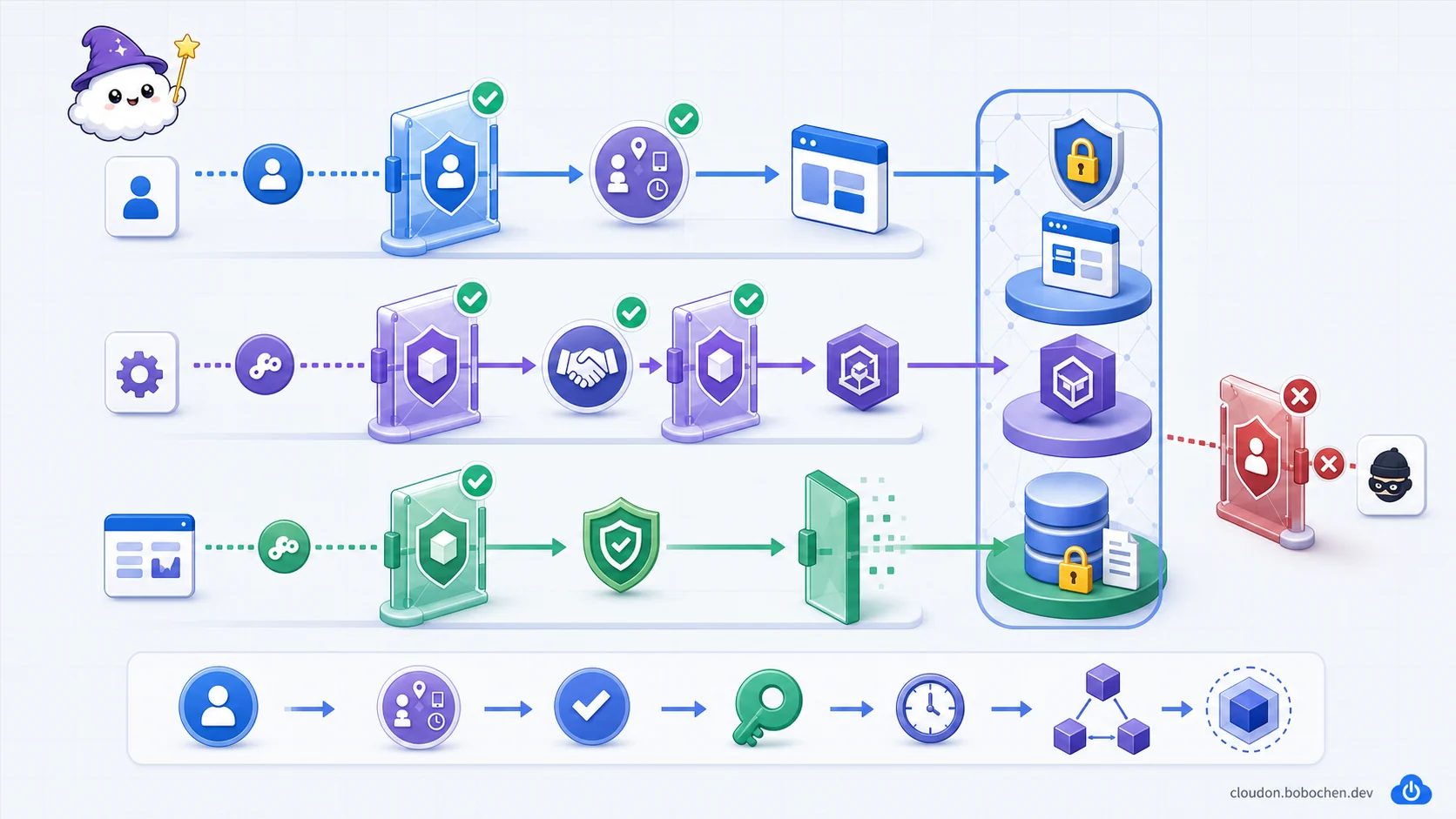
圖解:零信任要分別設計使用者、服務與資料路徑;每次存取都重新驗證身分與 context、限制權限範圍與時間,並用分段與資料邊界降低單一憑證被盜後的 blast radius。
先拆三條存取路徑
零信任設計至少要分別處理:
- 使用者到應用:員工、外包或客戶怎麼進 Web app、Console 和管理入口?
- 工作負載到工作負載:服務如何驗證彼此身分並限制 action?
- 工作負載到資料:即使一個服務被攻破,能讀走哪些資料、能否把資料送出 boundary?
三條路徑用的 enforcement point 不同。只把員工入口放到 IAP 後面,並不會自動保護 service account 或資料 egress。
使用者到應用:IAP 與 context-aware access
Chrome Enterprise Premium 的 access protection 可以組合:
- Cloud Identity/Google Workspace 的 user identity 與 MFA。
- Endpoint Verification 收集的 device attributes。
- Access Context Manager 定義的 access levels。
- IAM Conditions 與 IAP 在支援資源上執行授權。
例如,高風險管理介面可要求特定 group、受管理且磁碟加密的 device,以及短期 privileged access;一般內部知識站則可允許較廣的受管裝置。政策應根據資料和 action 風險分級,不要讓所有應用共用一條最嚴或最鬆的規則。
避免繞過 IAP
IAP 保護的是經過它的流量。設計時要確認:
- Backend 沒有另一個未受保護的 external IP、DNS name 或 load balancer path。
- Firewall 只允許必要的 IAP/load balancer health check 與 proxy path。
- 應用正確驗證 IAP identity assertion,不信任可由 client 自行送入的 header。
- Session、reauthentication 和 device posture 更新符合風險要求。
- IAP 不可用時要 fail closed、提供 break-glass,或讓低風險功能降級,這是明確決策。
IAP TCP forwarding 適合 SSH/RDP 等管理存取,不適合拿來做 bulk data transfer 或所有 application traffic。
流程圖暫時無法顯示,請重新整理頁面後再試。
Internet 入口:Cloud Armor 是其中一層
Cloud Armor 可以在支援的 load balancer backend service 上做 WAF、rate limiting、bot management 和 Adaptive Protection。安全規則上線時應:
- 根據應用 endpoint 和正常流量選 rule,而不是一次打開全部規則集。
- 先用 preview mode 觀察誤判。
- 以 log、request sample 和 application owner review 調整 sensitivity/exclusion。
- 分階段 enforce,為 false positive 準備快速回復。
- 持續更新,因為應用和攻擊方式都會變。
WAF 不理解完整業務授權。例如已登入使用者能否看某一筆訂單,仍由應用和 IAM/policy 決定。Geo filtering 也不能單獨證明資料主權或使用者身分。
流程圖暫時無法顯示,請重新整理頁面後再試。
網路分段:集中基線與團隊規則
Hierarchical firewall policies 可在 organization/folder 建安全基線,network firewall policies 與 VPC firewall rules 再處理更接近 workload 的需求。goto_next 允許上層把尚未決定的 traffic 交給後續 policy,而不是簡單的「上層全都比下層優先」。
實際 evaluation order 還會涉及 organization、folder、global/regional network firewall policies 和 VPC rules。變更前應依 firewall policy rule evaluation 模擬與測試。
好的分段規則會描述 service identity、port、direction 和用途,例如「checkout workload 能連 payment service 的 443」,而不是「prod subnet 彼此全部互通」。同時要保留 VPC Flow Logs、Firewall Insights 或合適 telemetry,確認實際流量和規則假設一致。
服務到服務:mTLS 只解決一部分
mTLS 可以讓雙方驗證 certificate identity 並加密連線;authorization policy 再決定某個 workload identity 能否呼叫特定 service/method。Cloud Service Mesh 可管理支援環境中的 service communication,Certificate Authority Service(CAS)則可在需要自訂 CA hierarchy、HSM-backed signing key 或跨叢集 CA 分隔時整合。
不要把「有 mTLS」寫成「服務間零信任完成」:
- Certificate 簽給誰,workload identity 如何建立?
- Sidecar、proxyless 或其他 data plane 是否涵蓋所有流量?
- Authorization policy 預設 allow 還是 deny?
- Certificate rotation、revocation 和 CA outage 怎麼處理?
- 被允許的 service 是否仍有過大的資料權限?
CAS 並不是 Cloud Service Mesh 所有部署的必要條件;Cloud Service Mesh 有自己的 CA 選項,應依 PKI 與合規需求選擇。
流程圖暫時無法顯示,請重新整理頁面後再試。
資料層:限制被盜身分能帶走什麼
即使使用者入口和 service-to-service 都驗證過,一個被攻破的 runtime identity 仍可能合法呼叫 API。資料層還要加入:
- IAM 與短效 workload identity,限制可讀 dataset/bucket。
- VPC Service Controls 控制支援 services 的 ingress/egress 與跨 perimeter data movement。
- Sensitive Data Protection 做 discovery 與 de-identification。
- CMEK/EKM 依控制需求管理 key access。
- Egress firewall、Secure Web Proxy 或其他 control 限制未受保護的外部目的地。
VPC SC 不會封鎖所有 Internet API,因此不能只靠 perimeter 阻止任意 exfiltration。Threat model 要把 Google-managed services 和一般 Internet egress 分開看。
流程圖暫時無法顯示,請重新整理頁面後再試。
從可見性高、風險可控的路徑開始
零信任轉型不需要套一個固定月份時程。比較實際的順序是:
- Inventory:列出 users、devices、apps、service identities、data flows 和 direct paths。
- Identity baseline:MFA、group lifecycle、service account key reduction、privileged access。
- 挑一條路徑試點:選 owner 清楚、風險可控的內部 Web app,導入 IAP 與 device context。
- 封旁路並量測:關閉 direct access,監看 denial、latency、help desk 和 break-glass。
- Workload segmentation:以 workload identity、mTLS/authorization 和資料最小權限縮小 blast radius。
- 持續驗證:用 policy tests、access review、red team 與 incident exercises 檢查控制。
先建立 inventory 和 telemetry,才能知道新 policy 會影響誰。一次把全公司 VPN 關掉,通常只會把未知依賴變成事故。
流程圖暫時無法顯示,請重新整理頁面後再試。
情境練習:遠端財務人員存取管理系統
假設財務人員會在公司與家中存取付款管理介面:
- 應用放在支援 IAP 的 HTTPS path,移除可繞過 IAP 的 backend public access。
- IAM role 綁 finance group,並以 access level 要求受管理、加密且符合 patch policy 的 device。
- 付款核准權透過有期限的 privileged access 取得;查詢與付款 roles 分離。
- Cloud Armor 保護公開入口,WAF 和 rate limit 先 preview 再 enforce。
- App runtime identity 只能讀必要帳務資料;付款 tool 使用另一個高權限 identity,並要求明確確認與 idempotency。
- Audit Logs、IAP access、device denial 和付款 action 進入中央 logging;異常地點、高額操作與 break-glass 使用觸發 review。
- 定期測試未管理裝置、離職使用者、IAP 旁路、被盜 runtime credential 和 logging destination failure。
這套設計不是因為「IAP 取代 VPN」而安全,而是每個高風險 action 都有身分、context、最小權限和 evidence。
本課檢查清單
- 零信任是明確驗證、最小權限、假設已遭入侵與持續評估,不是單一產品。
- 使用者、workload 和資料三條路徑要分開設計 enforcement points。
- IAP 後端必須封住 direct path,否則授權可能被繞過。
- Cloud Armor policy 要 preview、調整和分階段 enforce,不能取代業務授權。
- Hierarchical firewall 的
goto_next是委派,不應用三層簡表取代完整 evaluation order。 - mTLS 提供 workload authentication 和加密,authorization、identity lifecycle 與 data permission 仍要另做。
- VPC SC 保護受支援 services 的資料跨界;一般 Internet egress 需要其他控制。
延伸閱讀
- Chrome Enterprise Premium access protection
- IAP overview
- Cloud Armor best practices
- Cloud Service Mesh overview
下一步
下一課會進入 CI/CD 與 SDLC,練習把身分、供應鏈證據、部署核准和復原策略放進日常交付流程。